

Webshare Review: Features, Pricing, Pros and Cons
Webshare is a proxy service offering datacenter, static residential, and rotating residential proxies. This review looks at its proxy options, pricing, features, advantages, limitations, and the types of users who may find the service useful.
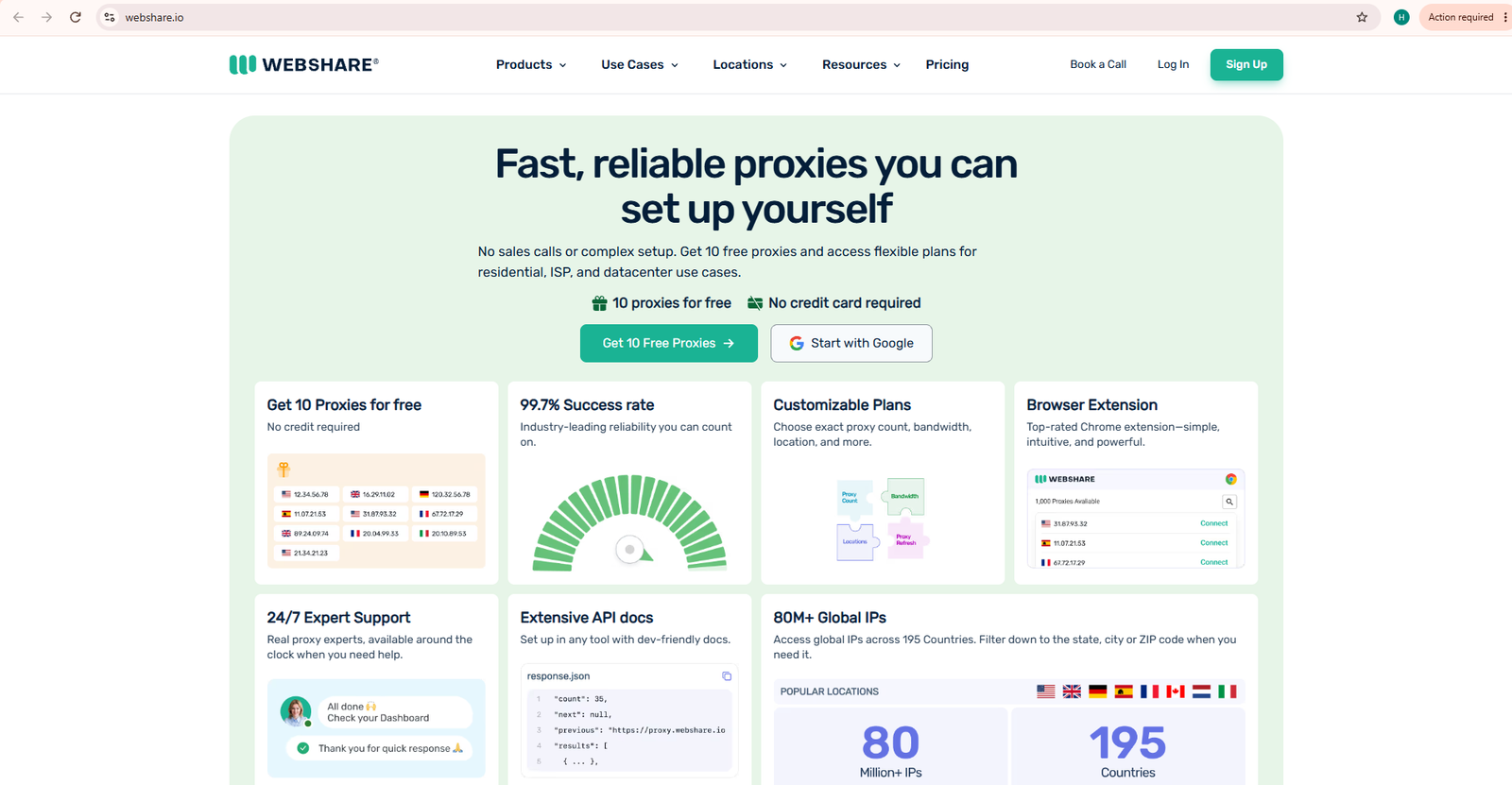
Webshare at a glance
Webshare offers several proxy types and entry-level pricing, making it an option for users who need proxy access for web automation, data collection, testing, and other online tasks. The right plan depends on your target websites, traffic volume, and IP requirements.
What Is Webshare?
Webshare is a proxy provider that offers access to different types of proxy infrastructure. Proxies route internet requests through intermediary IP addresses, which can be useful for tasks such as website testing, market research, public web data collection, and managing network requests across different IP addresses.
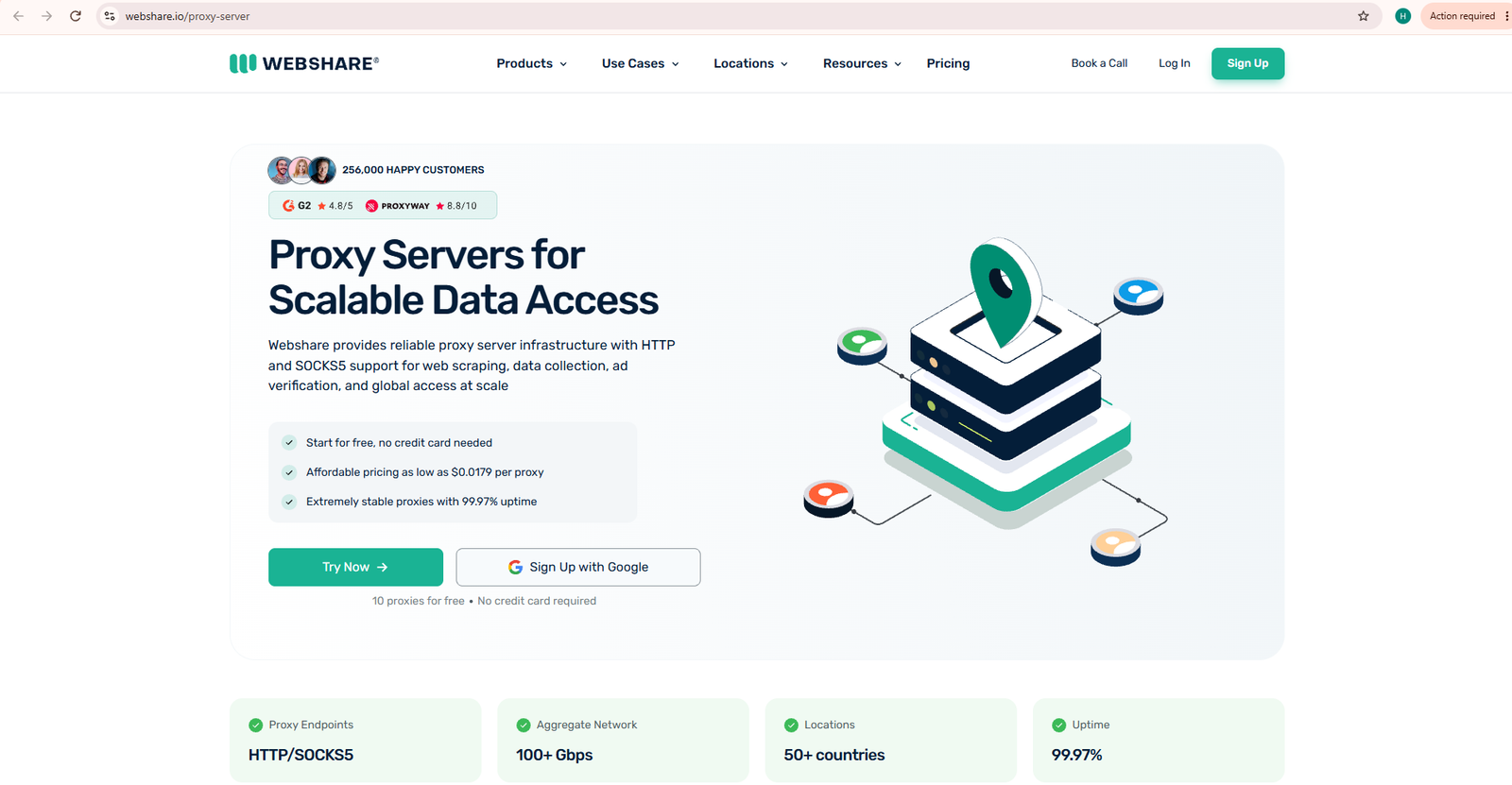
Webshare's main product categories include datacenter proxies, static residential proxies, and rotating residential proxies. Each category serves different needs: datacenter proxies use datacenter infrastructure, static residential proxies provide residential IPs intended to remain consistent, and rotating residential proxies use a pool of residential IPs with traffic-based pricing.
Webshare Proxy Types
1. Datacenter Proxies
Datacenter proxies use IP addresses associated with datacenter infrastructure. They are commonly considered for high-volume requests, software testing, and workflows where datacenter IPs are suitable.
- Designed for use cases that can work with datacenter IPs.
- Available in plans with a defined proxy count.
- May be less suitable for websites that restrict datacenter traffic.
- Plan limits and available locations should be checked before purchase.
2. Static Residential Proxies
Static residential proxies provide residential IP addresses that are intended to remain consistent during use. This can be relevant for workflows that need a stable IP rather than frequent IP changes.
- Useful when IP consistency is important.
- Residential IPs may be treated differently from datacenter IPs.
- Availability, location, and usage terms depend on the plan.
3. Rotating Residential Proxies
Rotating residential proxies route requests through a residential IP pool. Depending on the configuration, the IP can change between sessions or requests. These plans are often billed according to data usage rather than only the number of proxy endpoints.
- Suitable for workflows that need access to a pool of residential IPs.
- Pricing is commonly based on traffic consumption.
- Actual performance depends on target websites, locations, and traffic patterns.
Webshare Features
Proxy Dashboard and Management
Webshare provides a dashboard for managing proxy services and accessing proxy information. The exact management options available can depend on the product and plan selected.
Multiple Proxy Categories
Having several proxy categories lets users choose between datacenter infrastructure, static residential IPs, and rotating residential traffic. These products have different cost structures and are not interchangeable in every use case.
Authentication and Proxy Configuration
Proxy services generally require connection details and an authentication method. Before integrating Webshare with a browser, application, or automation tool, review the current documentation for the exact connection format, authentication options, and supported protocols for your plan.
Use Cases
Depending on the plan and applicable terms, proxy services may be used for:
- Website and application testing.
- Public web data collection in accordance with site rules and applicable law.
- Market and price research.
- Quality assurance and regional website checks.
- Network troubleshooting and automation workflows.
Webshare Pricing
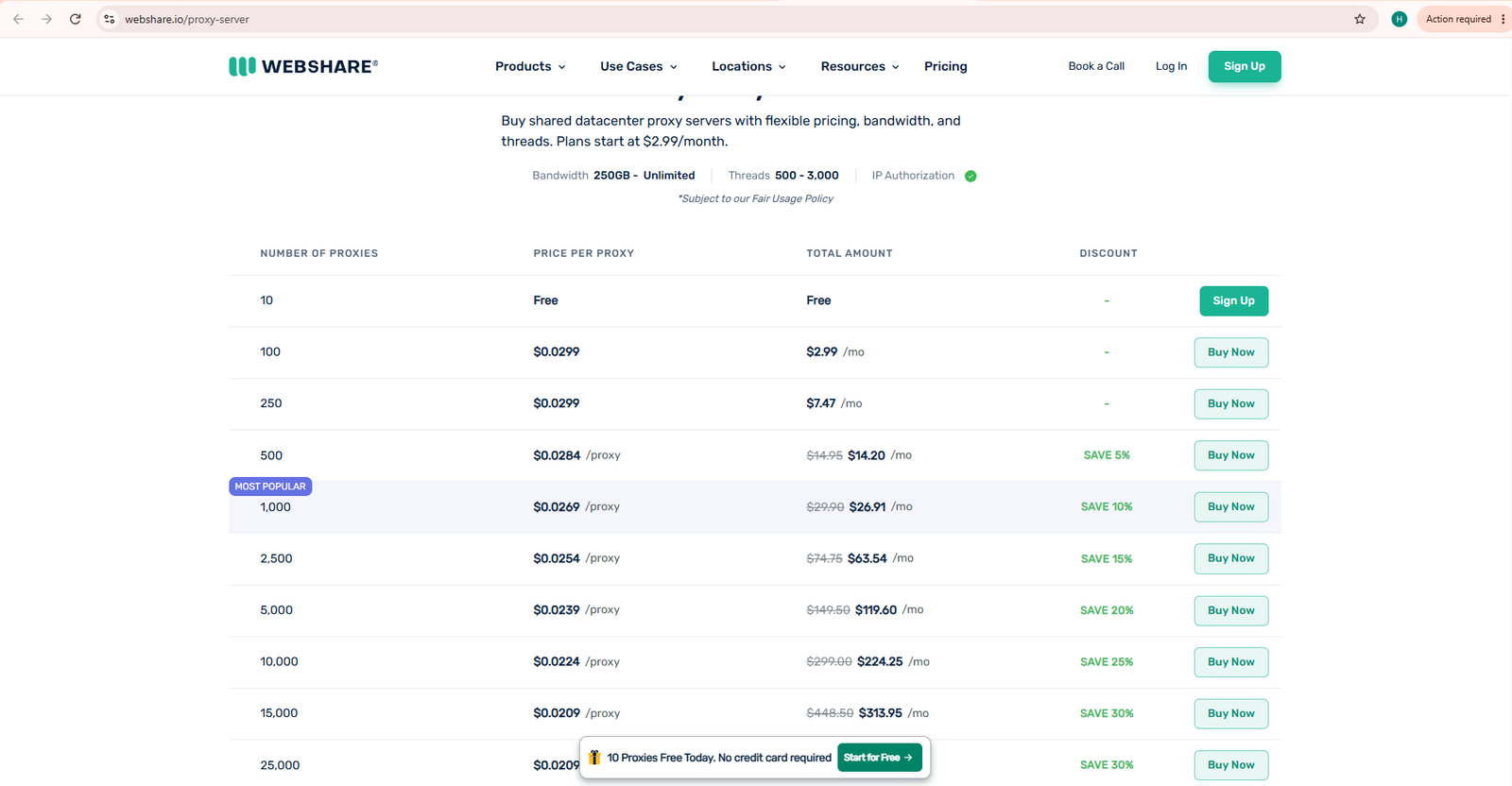
Webshare offers different pricing structures for its proxy products. The following figures are starting prices reported for the listed plans and may change. Check the official pricing page for current rates, plan limits, billing terms, and availability before subscribing.
Datacenter Proxies
Entry-level datacenter proxy plans have been listed with 100 proxies. Check the current plan page for exact features and limits.
View plans →Static Residential
Static residential plans have been listed starting with 20 proxies. Check current availability and included features.
View plans →Rotating Residential
Rotating residential pricing is based on traffic usage. Confirm the current per-GB rate and any minimum purchase.
View plans →Pricing Comparison
| Proxy type | Starting price | Pricing model | Typical consideration |
|---|---|---|---|
| Datacenter | $2.99/month | Plan-based | Datacenter IP access and proxy count |
| Static residential | $6/month | Plan-based | Consistent residential IPs |
| Rotating residential | $3.50/GB | Traffic-based | Residential IP pool and data usage |
Prices are indicative starting prices, not a guarantee of current availability. They may vary by product, billing period, and plan.
Pros and Cons
Pros
- Offers multiple proxy categories.
- Has entry-level pricing options.
- Provides a dashboard for managing proxy services.
- Offers both plan-based and traffic-based options.
- Can accommodate different proxy requirements depending on the plan.
Cons
- Different proxy types have different limitations and cost structures.
- Residential traffic costs can increase with usage.
- Datacenter IPs may not work with every target website.
- Performance and access can vary by target website and location.
- Users need to review plan limits and terms before subscribing.
Webshare Performance and Reliability
Proxy performance depends on several factors, including the proxy category, geographic location, target website, network conditions, and request volume. A proxy that works well for one workflow may not provide the same results for another.
We have not independently benchmarked Webshare's latency, success rate, or uptime in a controlled test for this article. For a performance-sensitive project, test a small plan against your actual target websites before committing to a larger purchase.
Ease of Use
Webshare's dashboard provides a central place to manage proxy services. New users should first identify the proxy type they need, review the connection instructions, and test the configuration with a small number of requests.
Users integrating proxies into scripts or third-party applications should consult the provider's documentation for supported authentication methods, connection formats, and usage limits.
Who Should Consider Webshare?
Webshare may be worth evaluating for:
- Developers: People who need proxy access for testing, automation, or application workflows.
- Researchers: Users collecting publicly available web data while respecting applicable laws and website terms.
- Businesses: Teams that need to evaluate proxy options for regional checks or market research.
- Budget-conscious users: People who want to compare entry-level proxy plans before purchasing.
Who Might Need Another Solution?
Webshare may not fit every project. Users who require a specific geographic location, a particular IP reputation, specialized integrations, or guaranteed performance should verify those requirements directly with the provider before purchasing.
If a target website blocks a particular proxy category, changing plans may not necessarily resolve the issue. Always ensure that your intended use complies with applicable law and the relevant website's terms.
Webshare Alternatives
When comparing proxy providers, consider the IP type, available locations, pricing model, traffic limits, authentication options, support, and terms of service. Compare equivalent products rather than comparing a datacenter plan directly with a residential traffic plan.
| Comparison factor | What to check |
|---|---|
| IP type | Datacenter, static residential, or rotating residential |
| Pricing | Monthly fee, per-IP cost, or per-GB traffic rate |
| Locations | Countries and regions available for the required plan |
| Usage limits | Traffic caps, concurrency, and connection restrictions |
| Support | Documentation, support channels, and response terms |
Explore Webshare
Review the provider's current proxy products, pricing, and terms to determine whether they match your requirements.
Visit WebshareFrequently Asked Questions
Is Webshare free?
Webshare has offered a free datacenter proxy plan. The number of proxies, traffic allowance, and eligibility conditions may change, so check the official website for current details.
How much does Webshare cost?
Starting prices previously listed include $2.99 per month for datacenter proxies, $6 per month for static residential proxies, and $3.50 per GB for rotating residential proxies. Verify current pricing and plan details before subscribing.
What types of proxies does Webshare offer?
Webshare offers datacenter proxies, static residential proxies, and rotating residential proxies.
Are Webshare proxies suitable for web scraping?
Proxy services can be used in certain public-data collection workflows. Suitability depends on the proxy type, target website, technical requirements, and applicable laws and terms of service.
Does Webshare offer rotating residential proxies?
Yes. Webshare offers rotating residential proxy services. Check the current product documentation for rotation behavior, traffic pricing, and configuration options.
Is Webshare easy to use for beginners?
Users can start by selecting a proxy category, reviewing the setup documentation, and testing a small configuration. The amount of technical work depends on the intended application.
Does Webshare guarantee that every website will work?
No proxy service should be assumed to work with every website. Access can vary based on the target website, IP category, location, and the site's own restrictions.
Final Thoughts
Webshare offers several proxy categories with different pricing and usage models. Datacenter proxies, static residential proxies, and rotating residential proxies serve different technical needs, so the best fit depends on the requirements of your project.
Before purchasing, review the latest plan details, confirm the available locations and limits, and test the service with your intended workflow. Pricing and features can change over time.